

close
Choose Your Site
Global
Social Media
In high-volume poultry processing, the blade acts as the critical bottleneck between operational efficiency and costly line downtime. Every single cut directly dictates the rhythm and profitability of your entire operation. Whether you outfit a manual processing line or a fully automated facility, selecting the right Poultry Cutting Blade requires careful balancing. You must continually weigh meat yield, edge retention, worker safety, and strict sanitation compliance. A poor choice quickly leads to product waste and increased safety hazards.
This guide provides an evidence-based framework for evaluating, shortlisting, and selecting industrial-grade poultry blades. We will explore how unique process specificities drive tooling choices and outline the hidden implementation risks you must avoid. You will learn exactly how to align your cutting equipment with demanding operational targets.
Blade geometry must strictly match the processing stage (e.g., serrated for evisceration, flexible curved for deboning) to maximize yield and prevent slippage.
Material selection requires a calculated trade-off between hardness (edge retention) and toughness (impact resistance against bone).
Advanced coatings (like TiN or DLC) are critical for reducing meat adhesion and surviving harsh, high-moisture washdown environments.
A true "Poultry Slaughterhouse Blade" must meet rigorous FDA/USDA sanitation standards, eliminating bacterial traps in handle designs or machine mounts.
Every processing facility faces identical operational pressures. You need maximum yield. You want zero production downtime. Selecting your tooling requires a rigid evaluation framework. You cannot base decisions purely on basic dimensions. You must evaluate the systemic impact of every edge on your floor.
Yield Optimization: Blade flexibility directly impacts your final meat recovery. A stiff knife leaves valuable protein attached to the bone. A properly curved profile traces the carcass perfectly. You recover more meat per bird. This incremental gain translates into massive annual volume improvements.
Downtime Reduction: Cutting edges dull rapidly under industrial use. Constant sharpening interrupts your workflow. You must evaluate how long an edge lasts during a high-speed shift. Minimizing sharpening intervals keeps your line moving consistently.
Safety and Ergonomics (OSHA Compliance): OSHA strictly monitors repetitive strain injuries in processing plants. Manual operators require perfectly balanced tools. Heavy knives cause severe wrist fatigue over an eight-hour shift. Machine blades demand predictable performance. Unpredictable blade shattering puts maintenance crews at extreme risk.
Sanitation and Compliance (FDA/USDA): Food facilities harbor aggressive bacteria. Microscopic crevices trap raw meat. You need seamless hardware designs. Full-tang manual knives eliminate bacterial hideouts inside handles. Machine blades must survive brutal chemical washes without corroding.
Geometry dictates performance entirely. You cannot deploy one universal profile across a plant. Each station demands highly specialized shapes. Utilizing the wrong shape destroys product quality instantly. We outline these specific geometric requirements below.
| Processing Stage | Required Geometry | Primary Operational Advantage |
|---|---|---|
| Slaughter & Bleeding | Razor-sharp, precision circular or curved edges | Ensures swift, humane cuts without tearing delicate neck tissues. |
| Evisceration | Scalloped or serrated edges | Bites into elastic tendons securely, completely eliminating dangerous slippage. |
| Deboning & Skinning | Flexible, narrow, and curved blades | Allows close tracing of complex bone structures to maximize breast and thigh yield. |
| Portioning | Rigid, thick-spined shears or cleavers | Delivers high impact toughness to cleanly sever joints without leaving bone fragments. |
Humane processing requires absolute precision. Automated lines use razor-sharp circular slicers. Manual stations rely on curved dispatching knives. You must achieve a swift, clean cut every single time. The edge must not tear delicate neck tissue. Ragged cuts compromise blood drain efficiency entirely. Poor bleeding degrades final meat quality and shelf life. You need tools engineered for immediate tissue penetration.
This critical stage demands scalloped or serrated edges. Poultry tendons possess incredibly high tensile elasticity. Wet connective tissue becomes exceptionally slippery. Straight edges slide off these tough bands easily. This slipping creates massive safety risks for the operator. A serrated profile aggressively bites into connective tissue. It securely grips the tendon before cutting. The operator severs it cleanly without dangerous forceful thrusts.
Skinning and deboning require immense agility. You need flexible, narrow, and curved tools. A rigid tool hacks away good meat accidentally. A flexible profile bends against complex bone structures effortlessly. It traces the skeletal frame intimately. This mechanical advantage minimizes expensive waste. You maximize your breast and thigh yields. Small geometric tweaks here drastically improve your bottom line.
Joint separation requires brute force combined with control. You need rigid, thick-spined tools. Facilities use heavy cleavers or heavy-duty poultry shears. Specialized shears feature built-in bone-holding notches. They lock the slippery bone firmly in place. You need high impact toughness here. The metal must snap joints cleanly. It cannot leave hazardous bone fragments behind. Hidden bone spurs pose severe choking risks for consumers and trigger expensive product recalls.
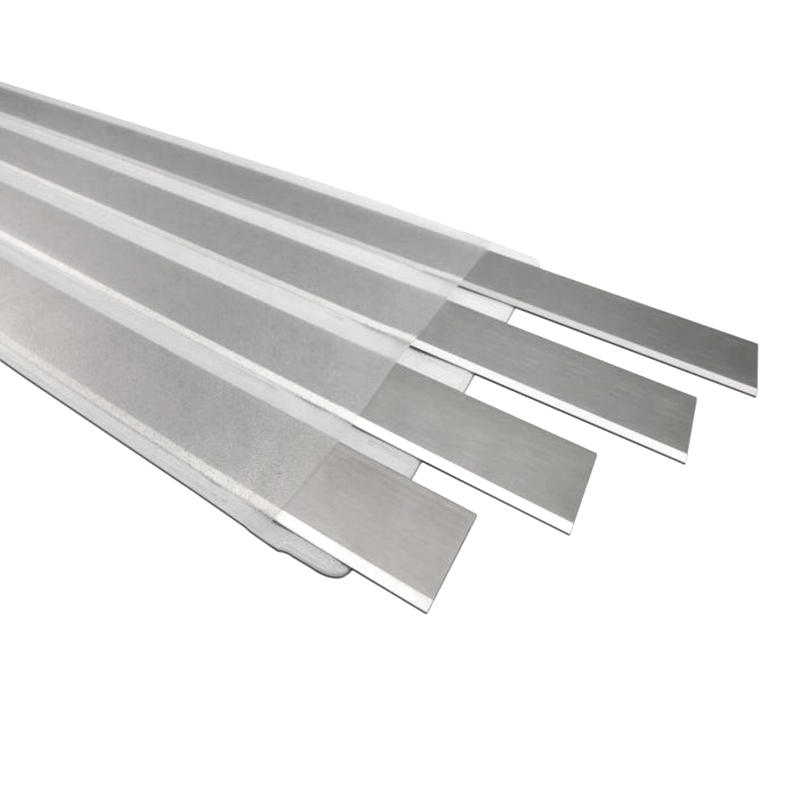
Steel composition determines operational survival. The commercial processing environment quickly destroys weak alloys. You must understand fundamental material science to select durable tools. We evaluate performance through three core metallurgical pillars.
High-carbon stainless steel serves as the industry baseline. You must strictly evaluate its Rockwell hardness (HRC). A blade manufactured too hard chips easily upon bone contact. These micro-chips ruin cut quality and contaminate meat. Conversely, a soft blade quickly loses its edge. Abrasive feathers and tough skin wear down soft steel rapidly. You need a highly calculated balance. Premium tools utilize specialized thermal treatments. They deliver both impact resistance against bone and long-term edge retention.
Advanced surface treatments transform cutting dynamics entirely. Titanium Nitride (TiN) reduces friction significantly across the blade face. Diamond-Like Carbon (DLC) provides extreme surface wear resistance. We view these through an operational performance lens. Advanced coatings prevent sticky meat buildup. Industry professionals call these frustrating blockages "gum-ups". A smooth coating stops soft tissues from sticking entirely. It reduces pulling and tearing drastically. This physical advantage accelerates line speed noticeably and protects product presentation.
Poultry plants operate as hostile industrial environments. The ambient air stays wet continuously. Acidic blood and animal fats coat everything. Cleaning crews blast equipment using hot sanitizing washdowns daily. Inferior metals pit and rust instantly under these conditions. Acidic fats eat away cheap steel aggressively. You must select alloys boasting superior corrosion resistance. High-chromium stainless steel survives these brutal daily washes. Rust compromises FDA compliance immediately, so you cannot ignore corrosion metrics.
Scaling a facility introduces distinct tooling challenges. The transition from hand labor to mechanization shifts your tooling priorities. You must match your procurement strategy to your automation level.
High-speed plants rely heavily on automation. They utilize circular slicers, automated gizzard cutters, and vertical slitter blades. You must demand absolute precision tolerances here. A true Poultry Slaughterhouse Blade integrates flawlessly into proprietary machinery. Inferior machine components generate microscopic vibrations during high-RPM spins. These unseen vibrations ruin product aesthetics completely. They cause ragged cuts and accelerate machinery wear. You must prioritize exact OEM compatibility. Precision grinding prevents catastrophic line jams.
Handheld knives dominate custom cutting stations. You find boning, fillet, and general processing knives everywhere. The biggest implementation risk involves operator skill variance. Not every worker sharpens tools effectively. Bad sharpening angles destroy blade geometry over time. Facilities struggling with consistency should adopt replaceable-blade systems. These surgically sharp options eliminate manual honing entirely. Workers simply swap a dull edge out in seconds. They resume processing immediately. This guarantees a perpetually sharp edge and standardizes cutting performance across all shifts. We highly recommend mandating cut-proof gloves for all manual operators to mitigate laceration risks.
Procuring high-quality tools represents only the first step. You must manage them correctly to realize their benefits. Implementation failures happen when facilities ignore daily maintenance realities.
Evaluating a cutting tool requires looking past the initial acquisition. You must calculate operational friction accurately. Consider the daily labor spent on repetitive sharpening. Factor in lost line time during frequent swap-outs. High replacement frequency disrupts production schedules heavily. You want a tool ensuring long, uninterrupted shifts. Analyze your "birds per hour" metric before and after introducing new tools. Sharp, durable edges keep production numbers remarkably stable.
Aggressive sanitation protocols destroy weak equipment rapidly. High-heat commercial dishwashers warp cheap handles permanently. Harsh chemical baths strip away basic rust-preventative layers. Inferior handle polymers crack under sudden thermal shock. Dangerous bacteria colonize these microscopic cracks instantly, leading to failed swab tests. You must factor dedicated maintenance protocols into your planning. Select robust materials built specifically for extreme washdowns. Hand-washing premium manual tools often extends their operational life significantly.
Your supplier directly determines your operational success. Poor vendor support leaves you stranded during critical breakdowns. Apply strict logic when shortlisting manufacturing partners.
Metallurgical Transparency: They must openly declare their steel grades and Rockwell hardness levels.
Customization Capabilities: They should provide custom geometries tailored for your proprietary automated lines.
Process Awareness: A great partner understands downstream consequences. They know exactly how upstream cuts affect downstream vacuum-seal packaging tolerances.
Selecting the appropriate processing tool remains a complex matrix decision. You must carefully balance processing stage requirements, steel metallurgy, and facility automation levels. A thoughtful choice transforms your facility's output, elevating both yield and safety.
Take the following action steps to upgrade your operations:
Audit your current processing line today to map out existing tooling inefficiencies.
Identify the exact root cause of your bottlenecks. Determine if frequent sharpening causes your downtime, or if incorrect geometry reduces your meat yield.
Request sample machine knives or manual tools from industrial vendors.
Run a localized shift-test to validate edge retention before procuring at scale.
A: Standard kitchen knives lack sanitary handles and industrial durability. Commercial poultry knives feature seamless, full-tang designs. This eliminates hidden bacterial traps. They utilize specialized high-carbon stainless steel engineered to withstand acidic fats and harsh chemical washdowns. Their specific geometric profiles handle repetitive, high-volume butchering efficiently without causing rapid operator fatigue.
A: Poultry tendons exhibit exceptionally high tensile elasticity. Wet connective tissue becomes extremely slippery. A straight edge easily slips off the tendon during an active cut. This slippage causes dangerous workplace accidents. Serrated edges aggressively grip wet, elastic tendons. They securely hold the slippery tissue in place and sever it cleanly.
A: Replacement frequency depends entirely on production volume and bone-contact frequency. High-volume manual lines might swap out replaceable blades daily. Automated circular slicers often run for weeks before requiring professional resharpening. You must monitor cut quality constantly. Replace or hone tools the moment microscopic meat tearing or ragged edges appear.
A: Yes, advanced coatings directly improve your yields. Titanium Nitride (TiN) drastically reduces surface friction. It prevents sticky raw meat from adhering to the steel surface. This stops the blade from pulling and tearing delicate soft tissues. You achieve cleaner cuts, experience fewer product rejects, and generate significantly less wasted meat.


