

close
Choose Your Site
Global
Social Media
Industrial cutting efficiency rarely stems solely from increasing raw machine speed. It relies fundamentally on complex tooling geometry. We must prioritize proper material matching. We must also focus aggressively on reducing operational downtime. Operators face severe bottlenecks when utilizing suboptimal or mismatched tools. These mismatched tools generate massive thermal damage. They create excessive material waste. They demand frustratingly frequent replacements. This scenario ruins daily throughput goals. It escalates operational expenses drastically. You need a better approach to procurement and implementation. This article provides a highly technical evaluation framework. We help you select tooling that balances feed rates perfectly. We show you how to maintain premium cut quality. You will learn to optimize your long-term cost-per-cut effectively. Elevate your production floor by understanding these core mechanics today.
Continuous Engagement: Round blades utilize a continuous rotational motion that significantly outperforms reciprocating alternatives in throughput and straight-line stability.
The TPI Trade-off: Efficiency is dictated by Teeth Per Inch (TPI)—lower TPI maximizes speed and chip clearance, while higher TPI maximizes finish quality and minimizes tear-out.
Material Superiority: Upgrading to carbide circular blades is the baseline for industrial applications, dramatically lowering the total cost of ownership through extended edge retention.
Thermal Management: Advanced blade features (expansion slots, laser-cut vibration dampeners) are critical to preventing blade warping and protecting the workpiece from burn marks.
We regularly uncover hidden costs driving down manufacturing profits. Inefficient cutting impacts more than just immediate production time. It causes severe motor fatigue. Pushing dull tools constantly overworks your expensive machinery. You also face unnecessarily high scrap rates. Excessive tear-out ruins valuable materials quickly. We define this wasted material as kerf loss. Furthermore, poor cuts waste essential labor hours. Workers spend significant time on secondary finishing tasks. They sand edges and deburr rough profiles manually. This redundant labor destroys your profit margins.
We must compare continuous rotation against traditional reciprocating action. Band saws and reciprocating tools possess inherent mechanical limitations. They push and pull sequentially. This back-and-forth action inherently limits maximum throughput. It also creates straight-line instability during rapid feeds. Circular motion delivers a massive mechanical advantage instead. It provides continuous, uninterrupted engagement. This seamless rotation allows for high-volume, straight-line production. You achieve faster feeds without sacrificing directional accuracy.
We also need to define kerf optimization clearly. The kerf represents the exact thickness of the cutting profile. A thick kerf removes more material per pass. It requires a massive power draw from your equipment. It lowers your overall material yield significantly. A thin kerf saves valuable substrate. It requires considerably less horsepower. However, thin profiles can suffer from deflection under heavy loads. You must balance thickness against physical stability precisely.
Common Mistake: Many facilities attempt to solve slow production by merely increasing the feed rate. This overloads the motor immediately and scorches the substrate.
Best Practice: Focus on mechanical advantages first. Ensure perfectly aligned equipment to maximize continuous rotational efficiency.
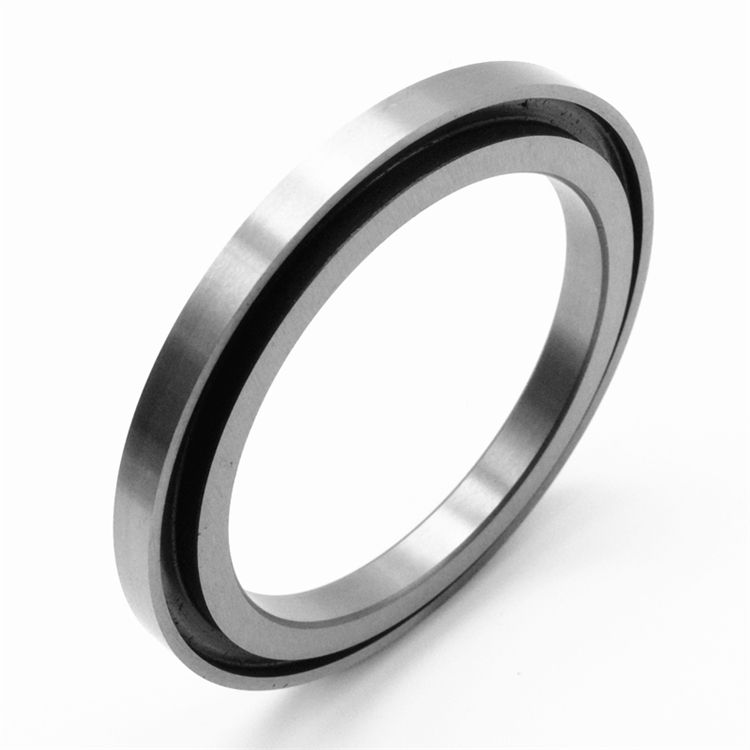
Many facilities hesitate to upgrade their tooling setups. They look solely at the initial purchase price. This is a fundamental error in production economics. You must position tungsten carbide as your baseline standard. High-throughput environments require highly robust solutions. This is exactly why industrial facilities rely entirely on Carbide Circular Blades. Tungsten carbide consists of rigid particles tightly bound by cobalt. This specific metallurgical composition delivers exceptional hardness.
Carbide tips withstand highly abrasive materials effortlessly. They cut engineered woods and non-ferrous metals smoothly. Standard high-speed steel (HSS) dulls rapidly under these precise conditions. Medium-density fiberboard (MDF) contains highly abrasive synthetic glues. Carbide handles these aggressive binders without losing its edge. It retains structural sharpness significantly longer. This extended edge retention provides a massive operational advantage.
Let us evaluate the true cost-per-cut economics accurately. Do not measure tooling value by the upfront invoice alone. Instead, meticulously track the frequency of tool swaps. Calculate your total machine downtime over a standard 30-day production cycle. Standard steel requires constant sharpening and frequent replacements. Each stoppage halts your entire assembly line completely. An operator might spend fifteen minutes replacing a dull tool. Doing this twice daily wastes hours weekly. Carbide upgrades eliminate these costly micro-stoppages entirely. Your return on investment materializes through sustained, uninterrupted production.
Efficiency depends heavily on Teeth Per Inch (TPI). We see a direct inverse relationship between speed and precision. Tooth geometry strictly dictates your final operational outcome. You cannot bypass this physical reality.
Low TPI configurations excel at rapid ripping and roughing. Fewer teeth naturally create much larger gullets. These deep spaces enable highly aggressive material removal. They clear chips rapidly during continuous operation. Rapid clearance strictly prevents chips from bogging down the motor. It prevents catastrophic heat buildup. Low TPI guarantees fast feeds, though it sacrifices edge smoothness.
High TPI configurations serve a completely different manufacturing purpose. We mandate them for critical crosscutting and finishing tasks. More teeth distribute the physical cutting load evenly. This wide distribution forces you to reduce feed speeds. However, it eliminates the need for post-cut sanding. You save massive amounts of rework time. High TPI prevents delicate laminates from violent shattering.
| Configuration | TPI Range | Cut Speed | Finish Quality | Best Industrial Application |
|---|---|---|---|---|
| Low TPI (Roughing) | 24 - 40 | Very Fast | Rough / Tear-out | Solid wood ripping, fast bulk cuts |
| Medium TPI (General) | 40 - 60 | Moderate | Acceptable | Standard plywood, mixed substrates |
| High TPI (Finishing) | 60 - 90+ | Slow | Ultra-Smooth | Delicate laminates, non-ferrous metals |
You must also carefully consider specific tooth grind profiles. Alternate Top Bevel (ATB) offers excellent overall versatility. It alternates the bevel angle between right and left. We highly recommend ATB profiles for solid wood applications. They cleanly sever wood fibers. Triple Chip Grind (TCG) provides maximum industrial durability. It alternates strictly between a flat tooth and a chamfered tooth. We specify TCG specifically for abrasive laminates and aluminum. It resists impact damage exceptionally well.
Engineers and operators face harsh implementation realities daily. Excessive noise creates unsafe, non-compliant working conditions. Blade wandering ruins expensive raw materials instantly. Thermal distortion destroys expensive tooling prematurely. We must address these negative variables effectively.
Continuous operation generates immense thermal energy rapidly. This friction-induced heat causes a standard Round Blade to warp out of alignment. Advanced tooling includes specialized heat expansion slots. These distinct slots give the metal room to expand safely. They strictly prevent warping as friction builds up. Proper heat dissipation protects the workpiece from permanent burn marks.
Vibration control remains equally critical for extreme precision. Manufacturers cut specific anti-vibration slots directly into the steel body. They often fill these narrow slots with dampening polymers. Specialized Teflon or PTFE coatings reduce surface friction further. These crucial features dramatically lower ambient noise decibels. Lower noise provides a major compliance benefit for OSHA safety standards. Furthermore, controlling vibration ensures a consistently true, clean cut. It extends the functional lifespan of your equipment arbors and bearings.
You need strict evaluation criteria for purchasing decisions. Follow this step-by-step logic to finalize your next tooling procurement.
Material-Tool Mapping: Never use a standard wood ripping tool on non-ferrous metals. This dangerous mismatch creates severe safety hazards instantly. It causes instant dulling and potential catastrophic mechanical failure. Always strictly match the specific substrate to the correct geometric profile. Follow manufacturer guidelines closely.
Machine Compatibility: Verify the exact arbor size before placing any bulk order. Check the maximum RPM ratings carefully. Exceeding RPM limits directly violates critical safety compliance protocols. You must also evaluate motor horsepower constraints thoroughly. Underpowered machines simply cannot drive heavy, aggressive tooling efficiently.
Pilot Testing and Shortlisting: We strongly recommend running physical pilot tests first. Order two or three specific profiles for trial. Run these profiles on actual production scrap material. Measure the exact chip clearance carefully. Evaluate the final finish quality visually. Only approve bulk ordering after confirming empirical results.
Do not skip these validation steps. A rigorous pilot test eliminates costly guesswork.
Industrial cutting efficiency requires precise, strategic technical alignment. You must align physical geometry, material composition, and application demands perfectly. Efficiency never comes from simply pushing equipment faster. It comes from working smarter. Mismatched setups cause rapid dulling and excessive waste. Take immediate action to audit your current tooling lifecycle today. Calculate your actual, verifiable cost-per-cut accurately. Identify where micro-stoppages hurt your daily output. Consult detailed technical specifications before executing your next procurement cycle. Select the correct tooth grind and prioritize thermal management features. Upgrade strategically to optimize your entire production floor permanently.
A: Efficiency depends entirely on your specific production goal. We recommend low TPI configurations for speed and rapid chip removal. These configurations are highly efficient for roughing. Conversely, high TPI configurations are the efficient choice for eliminating secondary finishing steps. They provide exceptionally clean cuts. Always match the TPI to your desired outcome.
A: Yes, absolutely in production environments. Their unique ability to stay sharp 10 to 50 times longer than standard steel heavily reduces machine downtime. It lowers replacement frequency. This extended longevity drastically improves your long-term return on investment.
A: We typically attribute burn marks to several exact factors. You might be using a dull edge. You might be pushing the material too slowly, causing excessive friction. You could be using excessively high TPI for a rough ripping cut. Lastly, lacking heat-expansion slots causes harmful distortion.
A: We strongly advise skepticism toward universal claims in professional settings. General-purpose options certainly exist. However, true efficiency and safety require material-specific tooth grinds and precise geometries. Mixing substrates compromises cut quality and tool longevity severely.


