

close
Choose Your Site
Global
Social Media
Premature blade failure goes far beyond a simple tooling annoyance. It quickly snowballs into a compounding cost center. You face machine downtime, compromised cut quality, and wasted material. When a tool fails unexpectedly, your entire production line stalls. Unpredictable tool wear heavily disrupts daily operations. It makes production scheduling highly unreliable. Inventory management teams also struggle to forecast replacement cycles.
You cannot afford to run a modern facility based on guesswork. We must transition our operational focus. Instead of simply asking how long a tool might last, we need to understand the precise variables controlling wear rates. This article breaks down the exact factors governing tool lifespan. We will explore material selection, machining conditions, and preventative maintenance protocols. You will learn how to implement data-driven procurement. By understanding these variables, you can standardize operational efficiency across your entire facility.
Round blade lifespan is primarily dictated by the alignment between blade material (e.g., high-speed steel, carbide) and the target cutting application.
Machine parameters—specifically feed rate, cutting speed, and vibration (run-out)—account for the majority of premature mechanical failures.
Thermal management (coolant and friction reduction) is critical to preventing metallurgical degradation.
Many facility managers treat tooling as a basic consumable. This mindset hides severe operational inefficiencies. The upfront price of a Round Blade is minor compared to secondary failure costs. Unplanned line stoppages drain your budget rapidly. A dull tool wastes expensive raw material. It creates unacceptable burrs. You also absorb compounding labor costs during unplanned changeouts. Maximizing lifespan requires looking past the initial purchase price. You must focus on labor and lost yield.
How do we define the true end of life for a cutting tool? It rarely involves catastrophic breakage. A tool officially fails when it consistently exceeds acceptable tolerance limits. It also fails when it causes thermal damage to the workpiece. Operating slightly dull tooling creates a dangerous ripple effect across your equipment. You must pull tools before they cross this threshold.
Running degraded tools harms your wider machine ecosystem. You will encounter several compounding risks:
Motor Strain: Dull edges force spindle motors to draw excessive amperage.
Bearing Wear: Increased cutting resistance translates directly into spindle bearing vibration.
Thermal Distortion: Friction transfers extreme heat into the workpiece, warping precision parts.
Scrap Generation: Poor edge quality demands secondary finishing operations or causes complete part rejection.
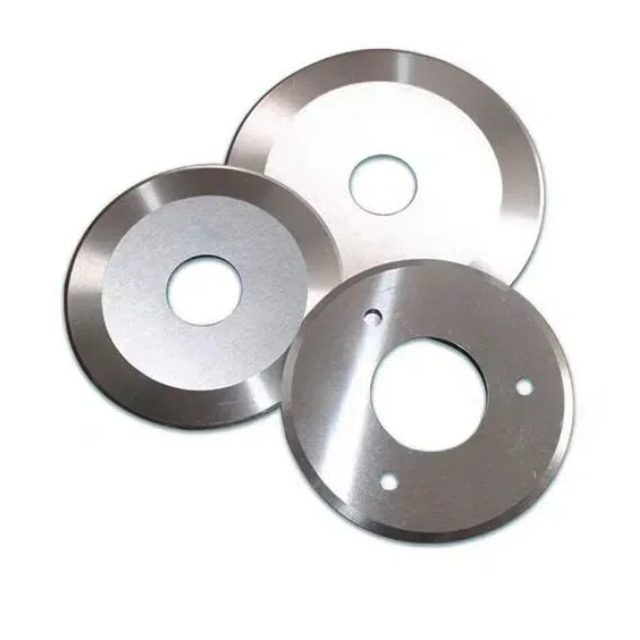
Base material dictates the theoretical baseline lifespan of any cutting tool. Manufacturers engineer specific metal alloys for distinct industrial applications. You must match the metallurgy directly to your target material. A mismatch guarantees premature failure.
Engineers consistently specify HSS Circular Blades for demanding, high-friction applications. High-Speed Steel provides an exceptional metallurgical balance. It offers immense toughness. It resists heat highly efficiently during continuous cutting operations. Standard carbon steel loses its temper quickly under thermal stress. In contrast, high-speed steel maintains structural integrity at elevated temperatures. You get longer uninterrupted runtimes. You drastically reduce the frequency of blade swaps on the production floor.
Advanced surface treatments combat abrasive wear and delay thermal fatigue. Engineers apply micro-thin coatings to the base metal. These layers drastically reduce friction coefficients. Titanium Nitride (TiN) offers excellent general-purpose wear resistance. PTFE coatings prevent sticky materials from adhering to the tool body. Coating selection directly influences how long the edge stays sharp.
The angle and shape of the cutting edge determine impact resistance. They also govern cutting efficiency. Narrower hook angles cut extremely cleanly. However, they degrade much faster under heavy physical loads. Broader edge profiles withstand impact better. They excel in heavy-duty roughing applications. You must balance finish requirements against structural durability.
| Base Material / Coating | Primary Benefit | Best Use Case | Common Failure Mode |
|---|---|---|---|
| Standard Carbon Steel | High flexibility, low cost | Low-volume, light materials | Rapid thermal degradation |
| High-Speed Steel (HSS) | Heat resistance, toughness | Continuous industrial cutting | Gradual abrasive edge wear |
| Tungsten Carbide | Extreme hardness | Highly abrasive composites | Micro-chipping from impact |
| TiN Coating | Friction reduction | High-speed metal shearing | Coating delamination over time |
Speed and feed rates control the actual physics of cutting. Running a blade faster than its rated speed destroys it quickly. High speeds generate immense localized heat. This thermal buildup causes rapid metallurgical degradation. Conversely, feeding material too fast causes severe mechanical overloading. The teeth bite off more material than the gullets can clear. This scenario leads to immediate micro-chipping along the edge.
You must actively manage cutting heat zones. Proper thermal management preserves the temper of the metal. Dry cutting works well for specific soft materials. It relies on the chips carrying heat away. However, dense alloys demand active cooling. You must utilize flood coolant or precision misting systems. Lubrication reduces friction between the tool body and the workpiece. Reduced friction directly extends your tool lifespan.
Tooling precision means nothing if your machinery lacks stability. Spindle vibration creates chaotic cutting dynamics. Improper mounting flanges introduce run-out. Run-out means the tool wobbles slightly during rotation. This wobble creates highly uneven wear patterns. One side of the tool performs all the work. It drastically reduces the effective lifespan of even premium industrial tooling. You must routinely audit your spindle health.
Your target material dictates the exact wear mechanism your tool experiences. Workpiece hardness alters how the edge degrades. Cutting standard soft alloys generally causes adhesive wear. Material microscopically welds itself to the tool face. Cutting abrasive composites causes classic abrasive wear. Hard particles physically grind away the sharp edge over time.
Workpieces rarely offer perfect uniformity. Material inconsistencies pose significant operational risks. You will encounter hard spots during production. Inclusions and exterior surface scale threaten tool integrity. Hitting a localized hard spot causes sudden, catastrophic edge damage. You must monitor incoming material batches. Surface prep often prevents unexpected tooling failure. Shot-blasting or pickling scaly materials protects your cutting edges.
We often overlook tooling storage methods. Improper handling creates invisible micro-fractures along the cutting edge. You must avoid stacking precision tools directly against each other. Hard metal shelving easily damages precision-ground teeth. We highly recommend suspending them on wooden pegs. Alternatively, store them in their original protective packaging.
Dirty tools fail significantly faster than clean ones. Cutting often leaves resin, pitch, or swarf buildup on the tool body. This buildup drastically increases side friction during operation. Increased friction creates a runaway feedback loop of heat. This heat quickly destroys the tool's metallurgical temper. Operators must implement strict cleaning protocols. Use dedicated resin removers and ultrasonic baths. Clean tooling operates cooler and lasts longer.
Reactive maintenance wastes money. You must pull a Round Blade for grinding before structural damage occurs. Running a tool until it chips ruins its resharpening potential. You must calculate the mathematical tipping point. Compare the cost of professional regrinding against purchasing new stock. Proactive removal preserves the base geometry. It allows you to resharpen the same tool multiple times. This approach maximizes your overall tooling investment.
Choosing the right supplier dictates your long-term success. Procurement and production teams must demand total transparency. Do not accept vague performance claims. You need verifiable data. Request comprehensive metallurgical specifications. Ask for lot-to-lot consistency guarantees. Reliable manufacturers will happily provide extensive coating test data. They will act as technical partners, not just vendors.
Upgrading to premium tooling sometimes fails entirely. Why? Facilities often ignore underlying machine conditions. You cannot fix a bad spindle by purchasing a better tool. Spindle run-out destroys expensive tools just as quickly as cheap ones. You must audit your machinery first. Ensure bearings run smoothly. Check flange alignment meticulously. Only then will a tooling upgrade deliver true ROI.
Never bulk-purchase new tooling without proof. You must set up a controlled pilot test. Follow this standardized framework to prove ROI:
Establish a Baseline: Record exact cuts-per-tool and downtime metrics for your current setup.
Audit the Machine: Measure spindle run-out. Calibrate your feed and speed rates.
Introduce the New Tool: Install the test tool under identical environmental conditions.
Track Performance: Monitor power draw, cut quality, and thermal buildup closely.
Analyze the Data: Compare the new lifecycle data against your historical baseline.
By executing this process, you eliminate emotion from procurement. Data alone will guide your purchasing decisions.
Maximizing tool lifespan represents a serious engineering process. It requires absolute synergy between tool composition, machine parameters, and operator discipline. You cannot achieve optimal results by focusing on just one variable. Proper thermal management supports advanced metallurgy. Stable machinery protects precision geometry.
We strongly warn against standardizing on the cheapest available tooling. Upfront savings vanish instantly during unplanned production stops. Do not make purchasing decisions without running comparative wear-analysis tests over a full production cycle. Your facility deserves data-backed operational strategies.
Take action today. Audit your current tool-wear data. Identify your specific production bottlenecks. We encourage you to consult with a technical tooling specialist. They will help match specific tool geometries and advanced materials directly to your machinery. Proactive management guarantees longer lifespans, better cuts, and highly predictable production schedules.
A: Look for secondary indicators before catastrophic failure happens. You will notice an increased power draw on the machine spindle. Listen for audible changes in the cutting pitch. Watch for excessive burring on edges. Thermal discoloration on the workpiece strongly indicates severe friction. Pull the tool immediately when these signs appear.
A: Not always. HSS Circular Blades offer superior heat resistance for continuous industrial applications. However, they may not yield a positive ROI in low-volume, intermittent setups. If abusive machine conditions cause accidental breakage before natural wear occurs, cheaper carbon steel might prove more economical.
A: No. Cutting too slowly often causes the teeth to rub instead of shear. Rubbing heavily increases friction. It work-hardens the target material. This hard layer then causes premature edge failure. You must optimize your speeds and feeds, not simply reduce them blindly.
A: Resharpening frequency depends entirely on the initial kerf width and tooth geometry. It also depends on how degraded the tool gets before removal. If you pull it proactively, you might achieve up to ten regrinds. Reactive grinding on chipped teeth drastically reduces this number.


