

close
Choose Your Site
Global
Social Media
Cutting materials effectively requires precision, power, and the right tooling. An improper choice can instantly ruin expensive workpieces. You cannot rely on a single blade for every project. Selecting the wrong Round Blade guarantees subpar results. These failures range from splintered wood and burned edges to severe safety hazards and premature tool wear. Many users overlook how specific blade designs interact with material density and machine power.
This guide breaks down core blade categories and technical specifications. You will learn the exact metrics dictating cutting performance. We also provide an evidence-based framework to help you shortlist the perfect tool for your application. By matching tooth count, grind, and kerf to your task, you prevent costly mistakes. Let us explore the mechanics behind these essential cutting tools. Using optimal equipment ensures cleaner finishes and reduces strain on your saw motor. Read on to master these critical selection criteria.
Material dictates geometry: Tooth design (grind) and count (TPI) must align with the target material; there is no universal "perfect" blade.
Kerf impacts tool strain: Thin-kerf blades save battery life on cordless saws but may deflect under heavy loads; full-kerf blades offer stability but require higher torque.
Safety relies on specs: Operating a round blade beyond its maximum RPM rating or with mismatched arbor sizes introduces critical failure risks.
Compromises exist: "Combination" circular blades handle both ripping and crosscutting adequately, but will not yield finish-grade cuts in either direction.
Establishing a technical baseline is critical before evaluating any cutting tool. Industry professionals do not judge a blade by its brand alone. They assess its anatomical metrics. These structural elements directly govern how the tool interacts with raw material. Understanding these variables allows you to predict performance accurately.
Tooth count, often measured as Teeth Per Inch (TPI) or total teeth per blade, dictates the speed and smoothness of your cut. The space between each tooth is called the pitch. These two factors work together to manage material removal.
Assess Speed vs. Finish: Fewer teeth mean a lower TPI. This configuration creates faster, rougher cuts. It provides excellent chip clearance, preventing the blade from binding in thick material.
Evaluate Heat Generation: More teeth mean a higher TPI. This setup yields exceptionally smooth, finish-grade cuts. However, a higher tooth count slows the feed rate and increases friction, generating more heat.
Determine Project Scope: Framing houses requires speed, making low-TPI blades ideal. Cabinetry demands pristine edges, necessitating high-TPI alternatives.
The kerf represents the width of the cut made by the blade. It dictates how much material the saw removes and how much resistance the motor faces.
| Kerf Type | Standard Width | Implementation Reality | Best Suited For |
|---|---|---|---|
| Thin Kerf | 3/32" | Removes less material. Reduces motor strain and extends battery life significantly. May deflect or wobble under heavy loads. | Cordless circular saws, underpowered saws, and standard dimensional lumber. |
| Full Kerf | 1/8" | Removes more material. Resists vibration and deflection. Demands substantial motor torque to push through dense stock. | Heavy-duty corded saws, stationary cabinet table saws, and thick hardwoods. |
Hook angle defines the lean of the teeth relative to the center of the blade. This angle changes how aggressively the tool attacks the material.
High/Positive Hook (e.g., 20°): The teeth lean forward. This aggressive geometry pulls the material into the blade rapidly. It acts as the industry standard for ripping solid wood along the grain.
Low/Negative Hook (e.g., -5°): The teeth lean slightly backward. This design creates a slower, highly controlled feed rate. It prevents the blade from self-feeding or grabbing. You must use negative hook angles for cutting metals, plastics, and when operating radial arm saws.
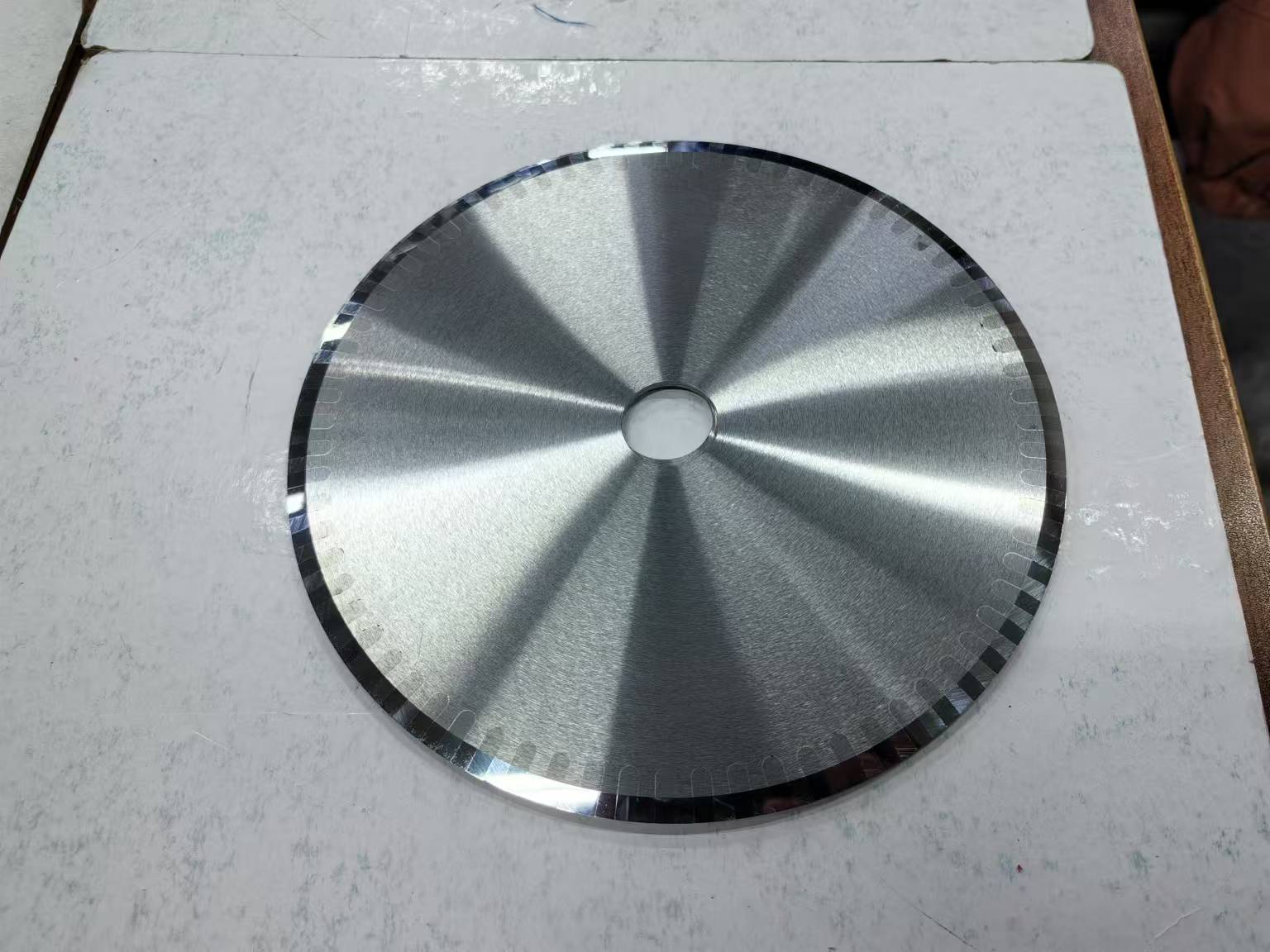
Categorizing your tooling based on the target material eliminates guesswork. Manufacturers engineer specialized Circular Blades to handle the unique densities and thermal properties of different substrates.
Wood presents unique challenges due to its fibrous nature. Cutting along the grain requires different mechanics than cutting across it.
Rip Blades (14–24 Teeth): These feature deep gullets (the curved space between teeth). Deep gullets allow rapid material removal when slicing parallel to the wood grain. They expel large shavings efficiently, preventing the blade from overheating.
Crosscut Blades (40–80 Teeth): Designed to sever wood fibers cleanly across the grain. The high tooth count minimizes tear-out, ensuring the fragile top veneer remains intact.
Combination/General Purpose (40–50 Teeth): These group teeth into alternating configurations. They typically feature several crosscut teeth followed by a ripping tooth and a deep gullet.
Assumption Check: These are best suited for high-volume general carpentry. They handle both tasks adequately but will not deliver specialized, finish-grade results in either direction.
Metalworking demands strict thermal management. Choosing the wrong category here leads to ruined workpieces and destroyed tools.
Abrasive Discs: These rely on friction-based cutting. They are inexpensive but generate massive amounts of heat and sparks. They melt through the metal rather than slicing it, leaving heavy burrs that require secondary grinding.
Carbide-Tipped/Cermet Metal Blades: These advanced tools cut by shearing the metal. They eject the heat into the metal chips rather than the workpiece. This leaves the cut material cool to the touch with virtually burr-free edges.
Implementation Risk: You must strictly adhere to lower RPM limits. Spinning these too fast destroys the carbide tips instantly.
Concrete, brick, and porcelain require diamond-encrusted steel cores rather than traditional teeth.
Continuous Rim: These feature a smooth, uninterrupted diamond edge. They deliver exceptionally clean cuts in ceramic and porcelain tile. You must use them with a water-cooling system (wet-cutting) to prevent thermal fracturing.
Segmented Rim: These feature deep cutouts along the edge. They tackle aggressive dry-cutting tasks in concrete, brick, and block. The segments allow the steel core to expand under extreme heat. They also clear out abrasive concrete dust rapidly.
Plastics and high-pressure laminates are incredibly brittle. They also melt easily under friction.
To cut them successfully, you need blades featuring high tooth counts and highly specific grinds. These designs slice cleanly without chipping the brittle surface. A negative hook angle is mandatory here to prevent the teeth from grabbing the plastic and shattering it.
Look closely at the carbide tips on a premium blade. You will notice they are not uniformly shaped. Engineers machine these tips into specific profiles called grinds. The grind dictates the blade's precise capability and the quality of the resulting edge.
Understanding these three primary geometries allows you to predict your cut quality before turning on the saw.
| Grind Designation | Tooth Profile Shape | Primary Cutting Action | Ideal Material Applications |
|---|---|---|---|
| FTG (Flat Top Grind) | Perfectly flat across the top edge. | Acts like a heavy chisel. Hacks out material rapidly. | Solid wood ripping, rough framing lumber. |
| ATB (Alternate Top Bevel) | Teeth alternate leaning left, then right. | Acts like a sharp knife. Scores and slices fibers cleanly. | Crosscutting solid wood, veneered plywood, melamine. |
| TCG (Triple Chip Grind) | Alternates a flat tooth with a chamfered "trapeze" tooth. | Distributes wear evenly. Prevents chipping on hard surfaces. | MDF, plastics, laminates, non-ferrous metals (aluminum/brass). |
Flat Top Grind (FTG): The chisel-like action makes FTG the undisputed champion of ripping. It clears a massive amount of sawdust efficiently. However, if you attempt to crosscut with an FTG blade, it will brutally tear the wood fibers, destroying the surface.
Alternate Top Bevel (ATB): By alternating the bevel angle, ATB teeth sever fibers on both sides of the kerf simultaneously. A standard ATB is great for general crosscutting. A High-ATB (Hi-ATB) features an even steeper bevel angle, producing flawless, glass-smooth cuts on delicate melamine and fragile plywood veneers.
Triple Chip Grind (TCG): TCG geometry focuses on durability. The chamfered tooth roughs out the center of the cut, while the following flat tooth clears the corners. This two-stage action handles highly abrasive materials perfectly. It remains the industry standard for cutting dense MDF, solid surface countertops, and non-ferrous metals.
Hardware mismatches cause catastrophic tool failures. You cannot force a blade onto a machine simply because it physically fits inside the guard. Compliance with machine specifications mitigates risk and ensures optimal performance.
Blades must strictly match your saw's designed operating diameter. Common sizes include 6-1/2" for most compact cordless models, 7-1/4" for standard handheld circular saws, and 10" or 12" for stationary miter and table saws.
Common Mistake: Never mount an undersized or oversized blade. Oversizing removes the safety guard's functionality, exposing you to lethal injury. Undersizing severely alters the cutting geometry and the saw's effective cutting depth.
The arbor is the central shaft of the saw motor that holds the blade. The blade's center hole must mate exactly with this shaft.
Most standard handheld saws utilize a 5/8" arbor. Larger stationary saws often require a 1" arbor. Do not attempt to drill out a blade's arbor hole to make it fit.
Implementation Note: Heavy-duty worm-drive saws often require a diamond-shaped arbor. Many standard blades feature a "diamond knockout" center. You simply punch out the perforated metal diamond to adapt the blade for worm-drive compatibility.
Every rotating tool carries a maximum safe RPM (Revolutions Per Minute) rating. Your saw possesses a top "no-load" RPM specification. The blade's maximum RPM rating must always exceed the saw's top RPM.
Operating a low-RPM metal blade on a high-RPM woodworking saw introduces severe hazards. Centrifugal force and extreme vibration can cause the brazed carbide teeth to detach. These heavy metallic fragments will eject at bullet-like speeds, causing catastrophic structural failure and immense danger to the operator.
Faced with walls of tooling options, buyers often experience decision paralysis. We have structured a clear, actionable selection matrix. Use this framework to shortcut the evaluation process and secure the exact tool for your workflow.
If framing structural lumber (speed > finish):
Then select a 24-Tooth FTG or ATB circular blade with a thin kerf. This setup maximizes your cutting speed and preserves battery life on cordless job site saws.
If cutting melamine or veneered plywood (finish > speed):
Then select an 80-Tooth ATB or Hi-ATB blade. The sheer volume of knife-like teeth guarantees surface splintering remains virtually nonexistent.
If cutting aluminum extrusions or brass:
Then select a TCG non-ferrous metal blade featuring a negative hook angle. This combination prevents the blade from dangerously grabbing the metal while leaving a burr-free edge.
If switching frequently between rip and crosscuts on a table saw:
Then select a 40-to-50 Tooth Combination blade. This mitigates tool-change downtime. It provides highly acceptable results for general shop tasks, provided you do not need perfect, tear-out-free finishes.
The overall effectiveness of your cutting operation depends entirely on synergy. You must align tooth geometry, kerf width, and machine capability with your specific material density. A mismatch guarantees poor cuts, wasted material, and safety hazards. Prioritize exact specifications over vague "multi-purpose" marketing claims to ensure professional results.
Before making a purchase, verify your saw’s maximum no-load RPM and precise arbor size. Next, audit your primary project material to dictate your needed TPI and grind profile. If you operate cordless tools, strongly consider thin-kerf options to optimize power. By adhering to this evaluation criteria, you protect your equipment, improve your efficiency, and elevate the final quality of your workpieces.
A: They serve as synonymous terms across the hardware industry. However, "round blade" is sometimes used broadly in manufacturing to include non-powered rotary cutter blades or food slicing knives. In contrast, "circular saw blade" strictly denotes rigid tooling designed specifically for high-RPM power tools.
A: Generally, no. Standard wood blades utilize aggressive positive hook angles. When applied to plastics or acrylics, these angles catch the material, causing it to shatter violently. Wood blades also generate friction that easily melts plastic edges. You need a negative hook angle TCG blade.
A: Watch for increased physical resistance during cuts or heavy burn marks left on your material. Inspect the carbide teeth visually. Look for chipped tips, missing carbide, or noticeably rounded edges. High-quality carbide blades can typically be professionally resharpened three to four times before requiring total replacement.


